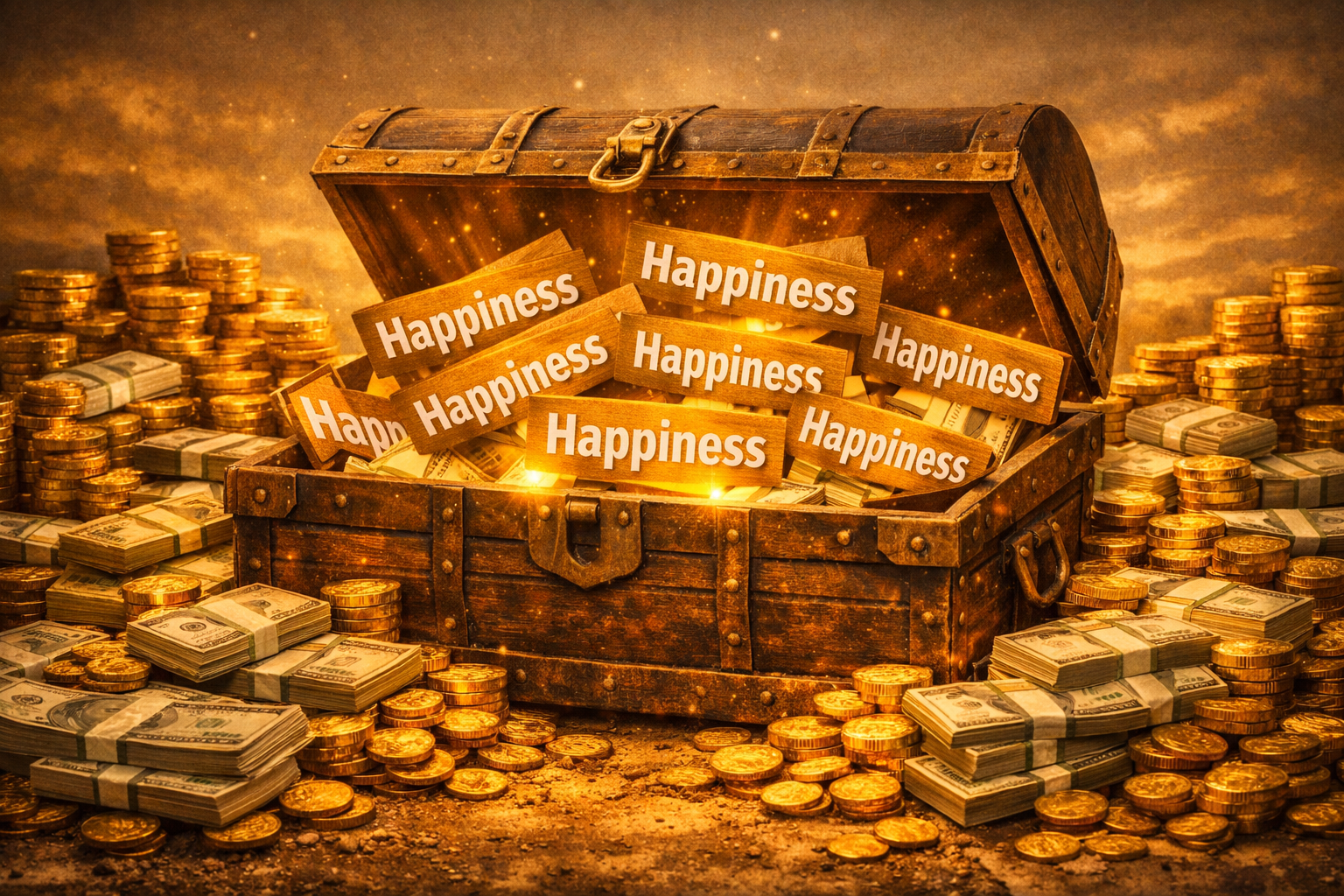
“True wealth isn’t measured by what’s in your hands, but by what’s in your heart.”
Money can buy comfort, convenience, and even moments of joy — but it can’t buy peace. It can fill your home with things, but not your soul with meaning. The world often tells us that happiness is found in abundance, yet the truth is, abundance without gratitude becomes emptiness. You can have a house full of possessions and still feel spiritually homeless. You can have a bank account overflowing and still feel emotionally bankrupt. That’s because happiness has never been about what you hold in your hands — it’s about what you carry in your heart.
There’s nothing wrong with wanting financial stability. God wants us to live wisely, to steward resources well, and to provide for our families. Scripture never condemns wealth; it warns against worshiping it. Money is a tool, not a treasure. It’s something we manage, not something we bow to. But when money becomes the measure of success, we lose sight of what truly matters — love, purpose, and faith. We start chasing numbers instead of nurturing relationships. We start pursuing status instead of pursuing peace. And slowly, without realizing it, we trade the eternal for the temporary.
Happiness isn’t found in the number of zeros in your account; it’s found in the contentment of your spirit. You can have little and feel rich, or have much and still feel poor. The difference lies in perspective. Contentment is not about having everything you want — it’s about appreciating everything you have. It’s the quiet realization that joy is not something you acquire; it’s something you cultivate. It grows in gratitude, in simplicity, in moments of stillness where you recognize that God has already given you more than enough.
Money can open doors, but it can’t heal hearts. It can buy medicine, but not health. It can buy companionship, but not genuine love. It can buy entertainment, but not joy. Happiness is a spiritual state — it’s peace that flows from knowing who you are and whose you are. It’s the inner assurance that even if everything around you changes, God remains constant. It’s the kind of joy that doesn’t depend on circumstances, because it’s rooted in something deeper than circumstances.
When we chase money without balance, we often end up chasing shadows. We run after things that look like fulfillment but leave us feeling empty. We work ourselves into exhaustion trying to maintain an image that doesn’t reflect our true identity. But when we pursue purpose, money becomes a tool, not a master. It serves rather than controls. It becomes something we use to bless others, to build legacy, to create opportunities, to support what matters. Purpose gives money meaning. Without purpose, money becomes a burden disguised as a blessing.
The happiest people aren’t always the wealthiest — they’re the ones who’ve learned to be grateful in every season. They see blessings in simplicity, joy in service, and peace in surrender. They understand that life is not measured by accumulation but by appreciation. They know that a grateful heart turns ordinary moments into extraordinary gifts. They’ve discovered that joy is not found in having more, but in needing less.
God’s Word reminds us: “Keep your life free from love of money, and be content with what you have.” That doesn’t mean we shouldn’t work hard or dream big — it means we should never let money define our worth or dictate our joy. It means we should hold money loosely and hold God tightly. It means we should remember that everything we have is temporary, but the peace God gives is eternal.
When your heart is anchored in gratitude, even small blessings feel abundant. When your spirit is grounded in faith, even challenges become opportunities. Gratitude shifts your focus from what’s missing to what’s present. Faith shifts your focus from what’s uncertain to what’s promised. Together, they create a foundation for happiness that money can’t touch.
Money can enhance your life, but it can’t enrich your soul. It can make life easier, but it can’t make life meaningful. Meaning comes from connection — with God, with people, with purpose. Meaning comes from living in alignment with your values, from loving deeply, from giving generously, from serving faithfully. Meaning comes from knowing that your life matters beyond what you earn or own.
When you build your life on money, you build on sand. When you build your life on faith, you build on rock. Money fluctuates. Markets crash. Opportunities shift. But God remains steady. His peace remains available. His joy remains accessible. His presence remains constant. That’s why true happiness is spiritual, not material. It’s rooted in something the world can’t give and circumstances can’t take away.
So, earn wisely. Save diligently. Give generously. But never forget — happiness isn’t something you buy; it’s something you build through love, purpose, and peace. It’s something you cultivate through gratitude, humility, and trust. It’s something you experience when you stop striving for more and start appreciating what already is.
Because in the end, money fades, but joy remains. Wealth shifts, but peace endures. Possessions break, but purpose lasts. And when your life is anchored in what truly matters, you discover a richness that money could never provide. You discover a joy that doesn’t depend on circumstances. You discover a peace that surpasses understanding.
True happiness is not found in abundance — it’s found in alignment. Alignment with God’s will. Alignment with your purpose. Alignment with gratitude. When your heart is aligned with heaven, your life becomes full on earth. When your spirit is aligned with truth, your soul becomes satisfied. When your mind is aligned with peace, your days become lighter.
Money may help you live comfortably, but only God can help you live meaningfully. Money may fill your hands, but only love can fill your heart. Money may build a house, but only faith can build a home. Money may buy a bed, but only peace can give you rest.
So choose wisely what you chase. Choose wisely what you value. Choose wisely what you measure your life by. Because the greatest wealth you will ever have is not in your bank account — it’s in your spirit. It’s in your relationships. It’s in your purpose. It’s in your peace.
And when you understand that, you stop living for money and start living for meaning. You stop chasing wealth and start cultivating wisdom. You stop striving for more and start appreciating what already is. You stop measuring your life by what you have and start measuring it by who you are becoming.
Because in the end, money fades, but joy remains. And joy — real, deep, soul‑anchored joy — is the kind of wealth that never runs out.
Scripture for Reflection:
“For where your treasure is, there your heart will be also.” — Matthew 6:21